Most students spend four years gaining experiences. Then they spend four weeks panicking about their resume.
You attended workshops, led a club, completed an internship, and solved problems during group projects. But when the time comes for an interview and someone asks you to describe a time you handled pressure, your mind goes blank.
That is not because you have a bad memory—it is because you never wrote those experiences down.
What Is a Career Journal and Why Should You Care?
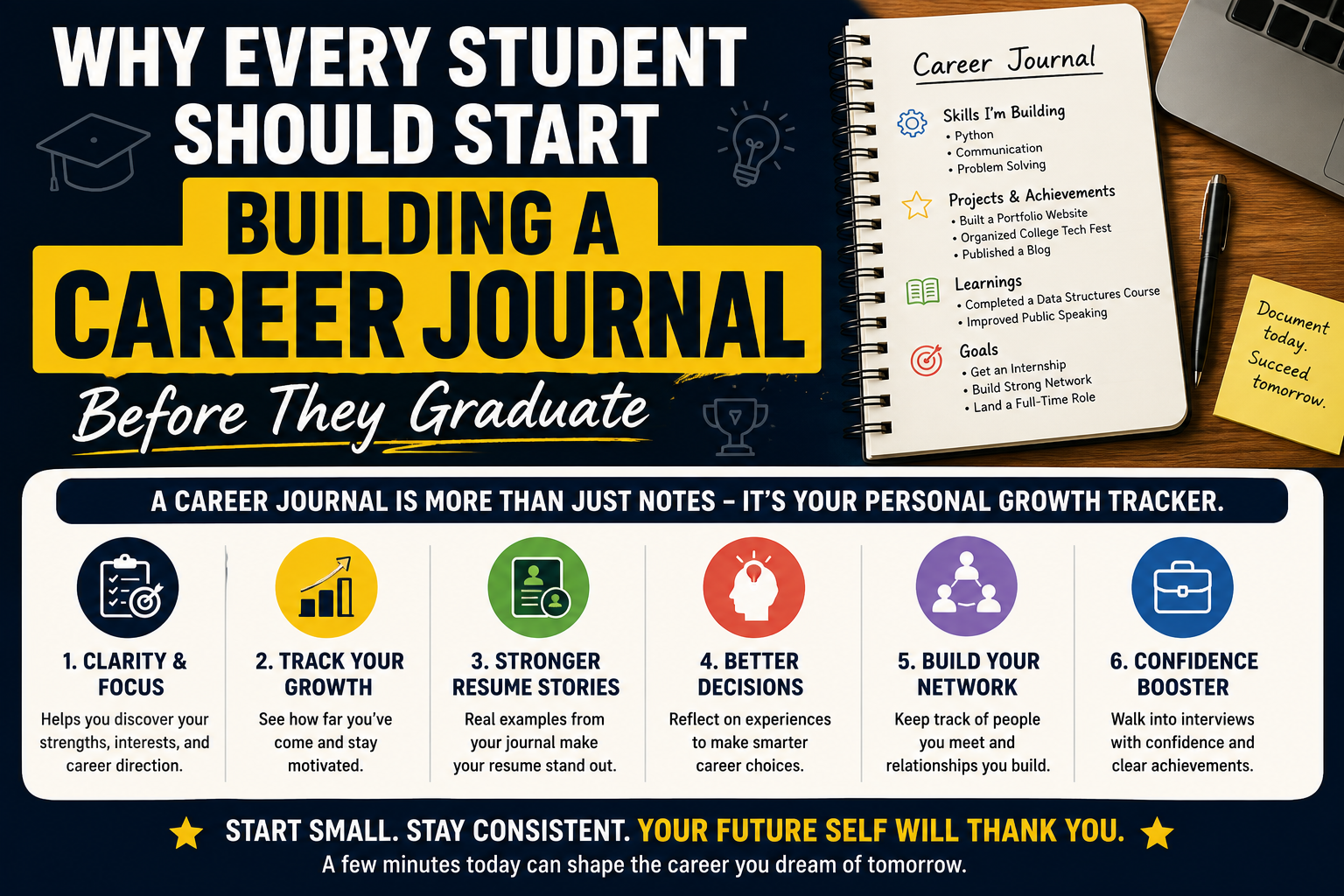
A career journal is a record of what you did, what you learned, what challenged you, and what you discovered while you were a student. Think of it as your personal career database.
You can write down every task you completed during your internship, every decision you made in a project, every piece of feedback you received from a professor or mentor, and every moment that surprised you.
You do not need a fancy notebook. A simple notebook, a Google Doc, or even the Notes app on your phone is enough. What matters is writing things down while they are still fresh in your mind.
Reason 1: You Will Forget More Than You Think
One of the biggest reasons to start a career journal is that you will forget more than you expect.
After finishing your marketing internship, you might think you will remember everything.
Six months later, you can barely remember the company’s name. Memory fades quickly, especially when you are busy with exams, new semesters, and other responsibilities.
Students who wait until their final year often end up writing vague resume points like, “Helped with marketing tasks.” A career journal helps you capture important details while they are still fresh.
Reason 2: It Makes Resume Writing Faster and More Accurate
Another major benefit of keeping a career journal is that writing your resume becomes much easier.
Instead of trying to remember what you did months ago, you can simply open your journal and use your notes.
For example, instead of writing a generic statement, you can write:
“Created Instagram posts for a brand campaign that reached 3,000 followers during a two-week internship.”
Specific details make your resume much stronger.
Reason 3: It Prepares You for Interviews Without Extra Effort
A career journal also makes interview preparation much easier.
Interviews often require you to recall real examples from your academic or professional experiences. If you have documented those experiences, your answers become much more natural.
When an interviewer asks about handling conflict, working under pressure, or solving a difficult problem, you already have real stories prepared because you have written them down.
Reason 4: It Helps You Discover What You Actually Want
Many students choose careers simply because they sound prestigious or because someone else suggested them.
Writing regularly about your experiences helps you notice patterns.
You begin to recognize which tasks excited you, which projects made time fly, and which responsibilities felt exhausting.
You discover which subjects genuinely interested you and which ones you simply completed.
This kind of self-awareness is incredibly valuable when making career decisions.
Reason 5: It Turns Ordinary Experiences into Career Evidence
A career journal helps transform everyday experiences into valuable career evidence.
You do not need an internship or a major award to impress recruiters. You simply need to explain what you did, what you learned, and why it mattered.
For example:
- A part-time customer service job demonstrates communication, patience, and problem-solving skills.
- Managing sponsorships during a college fest demonstrates planning and negotiation skills.
- Recovering from a failed project demonstrates resilience and critical thinking.
These experiences become valuable career stories when you identify the skills involved, explain the outcome, and connect them to what employers value.
What Should You Write in Your Career Journal?
Keep it simple.
After every meaningful experience, answer these six questions:
- What did I do today?
- What did I learn?
- What went well?
- What was difficult?
- What skill did I develop?
- What would I do differently next time?
You do not need to write long entries. Even a short paragraph every week will become an incredibly valuable resource over time.
When Should You Start Your Career Journal?
Now.
Do not wait until your internship ends or placement season begins.
Even if you are currently in your second year, start today.
The earlier you begin, the richer your career record will become. Students who start during their first year enter placement season with years of documented growth, practical examples, and genuine self-awareness. Students who wait until the final year usually arrive with unnecessary stress.
How to Start Writing a Career Journal
Five minutes each week is enough.
Open your Notes app after an interesting class, a campus event, an internship task, or any experience that taught you something valuable.
Write it down while it is still fresh.
Conclusion
Start writing your career journal today.
If you stay consistent, by the time you graduate, you will have a complete record of your growth, achievements, and experiences that many of your peers will wish they had.
Your future self will thank you for starting today.