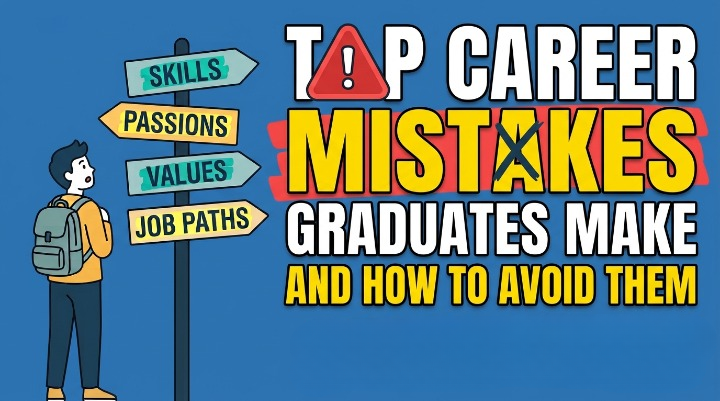
The first big career mistakes students make after graduation is mass applying online, not building strategic professional networks, and taking high short term salaries instead of long term skill development. Instead of passively searching for a job, graduates can overcome these hurdles by matching their first employment decision to targeted skill development and data-backed market needs.
Recognizing Career Mistakes Algorithm Traps And Post-Graduation Students Make
The typical cause of long-term unemployment is serious mistakes in the job search directly after graduation, especially when the same resume is uploaded to automated applicant tracking systems. New grads need to go from indiscriminate volume to highly targeted applications to beat the corporate screening filters of today.
Many current candidates think that applying to fifty jobs a day increases their chances of getting interviewed. But this spray and pray method is one of the most destructive mistakes that graduates make in their careers. Corporate recruitment heavily relies on parsing algorithms that flag generic resumes as irrelevant.
Instead of applying to everything, study the target job descriptions for specific keywords. You can ensure that you’re compliant with tracking software by tailoring documents to each position.
By concentrating on quality, custom applications, you can sidestep these post-graduation job search mistakes and achieve better interview response rates. Candidates can stand out by correcting these systemic job search mistakes after graduation. This change is one of the most important career growth tips for fresh graduates who are willing to join the workforce at the earliest.
Career Mistakes to Avoid After Graduation & How They Impact Salary and Growth
Many students make the big career planning mistake of choosing an initial position based solely on starting salary. The first three years of professional development are often derailed by the pursuit of quick financial gains over structured mentorship and skills development.
To judge a job offer only by the financial rewards it may bring is shortsighted. Joining a company without a mentorship program can limit your earning potential in the future. This is one of the biggest career mistakes new graduates need to avoid to stay marketable in the long run.
Often the lower-paying job at an innovative company comes with steeper learning curves and exposure to cutting-edge tech. The new professional needs to closely examine the tools, methodologies and the leadership style offered by an employer.
Skimping on these fundamental career planning mistakes for students is a recipe for long-term career equity, not short-term cash flow.
The Contrarian Take on Career Mistakes Students Make After Graduation and Hyper-Specialization
Conventional academic advising promotes early niche focus, but starting on this route immediately after college could be one of the most common career errors after college graduation. Building a very narrow set of skills early on restricts professional mobility and makes young professionals very vulnerable to macroeconomic shifts in the market.
Universities are prone to encouraging early specialization, but modern industries appreciate agile generalists early in a career. One of the biggest mistakes students make after graduation is to focus only on one software or niche sector.
To overcome this limitation, young professionals need to develop a T-shaped skill profile. This entails building deep expertise in one core discipline and broad competence in adjacent fields.
For example, a marketing graduate should do design but also understand data analytics. Getting your head around cross-functional skills can help professionals steer clear of common career pitfalls post-graduation, and protect against sudden industry automation.
Networking Mistakes New Graduates Make in a Digital Economy And How to Fix Them
The transactional networking mistake that fresh graduates make is only reaching out to industry professionals when they are actively looking for a job referral right then. Building authentic, value-first professional relationships long before you need assistance pays far superior long-term career dividends.
Copy-pasting messages on professional platforms to ask people for jobs is not effective at all. These transactional interactions are routinely ignored by industry leaders. A big mistake graduates make in their careers is ignoring organic relationship building.
Ask any graduate what the biggest mistakes they make in their careers are, and transactional messaging will always be right up there at the top. “The best way to network is with professional curiosity, not immediate demands.
New alumni should request brief informational interviews to learn about trends in the industry. Keeping the relationship warm with follow-up articles.
Casual digital contacts turn into active career advocates to fix these networking mistakes for new grads. The veterans of the industry said that not making the usual networking mistakes of fresh graduates is crucial for long-term placement.
Practical Application: The Career Mistakes to Avoid After Graduation
To know how to avoid career mistakes after graduation, it is necessary to analyze real operational scenarios that follow the professional path of the graduates in their early professional lives. Talking about particular workplace issues helps junior employees to navigate modern corporate induction, workplace performance evaluations and early career milestones.
Take a recent graduate who got a job in a logistics company. The graduate focused solely on the tasks assigned to him, in isolation, without any cross-departmental collaboration. This passive execution highlights classic first job mistakes to avoid after college resulting in early stagnation.
To turn this around, the employee changed strategy. The employee integrated daily responsibilities with organizational objectives, and created weekly reports with measurable metrics. The manner in which this is done shows how to implement modern graduate career planning tips effectively.
The result was very different and led to a six-month promotion. Avoiding first job mistakes right out of college can lead to vertical mobility. To fix these common post-graduation career mistakes, the employee decided to prioritize cross-functional communication over isolated execution.
Career Growth Tips For New Graduates To Ensure Lifelong Learning
One of the most common career mistakes that a fresh graduate makes is to think that learning ends with a formal degree. In a fast-changing global economy, continuous skill acquisition via certifications and independent projects is necessary to remain competitive.
A university degree is the entry ticket, but does not ensure a lifetime of upward mobility. One of the career planning mistakes students make is relying only on formal academic qualifications.
New professionals must spend a lot of time and effort to upskill themselves to continue to progress. Getting special certifications and building portfolio pieces is a proactive mindset. These habits are in close alignment with the essential career growth tips for new graduates.
By learning strategically how to avoid career mistakes after graduation and putting into practice graduate career planning tips young professionals build a resilient foundation for weathering sudden industry disruptions
Understanding the specific career mistakes fresh graduates should avoid, can help you proactively future-proof your career trajectories. Young professionals avoid these top post-college job mistakes to set themselves up with a strong foundation for growth.