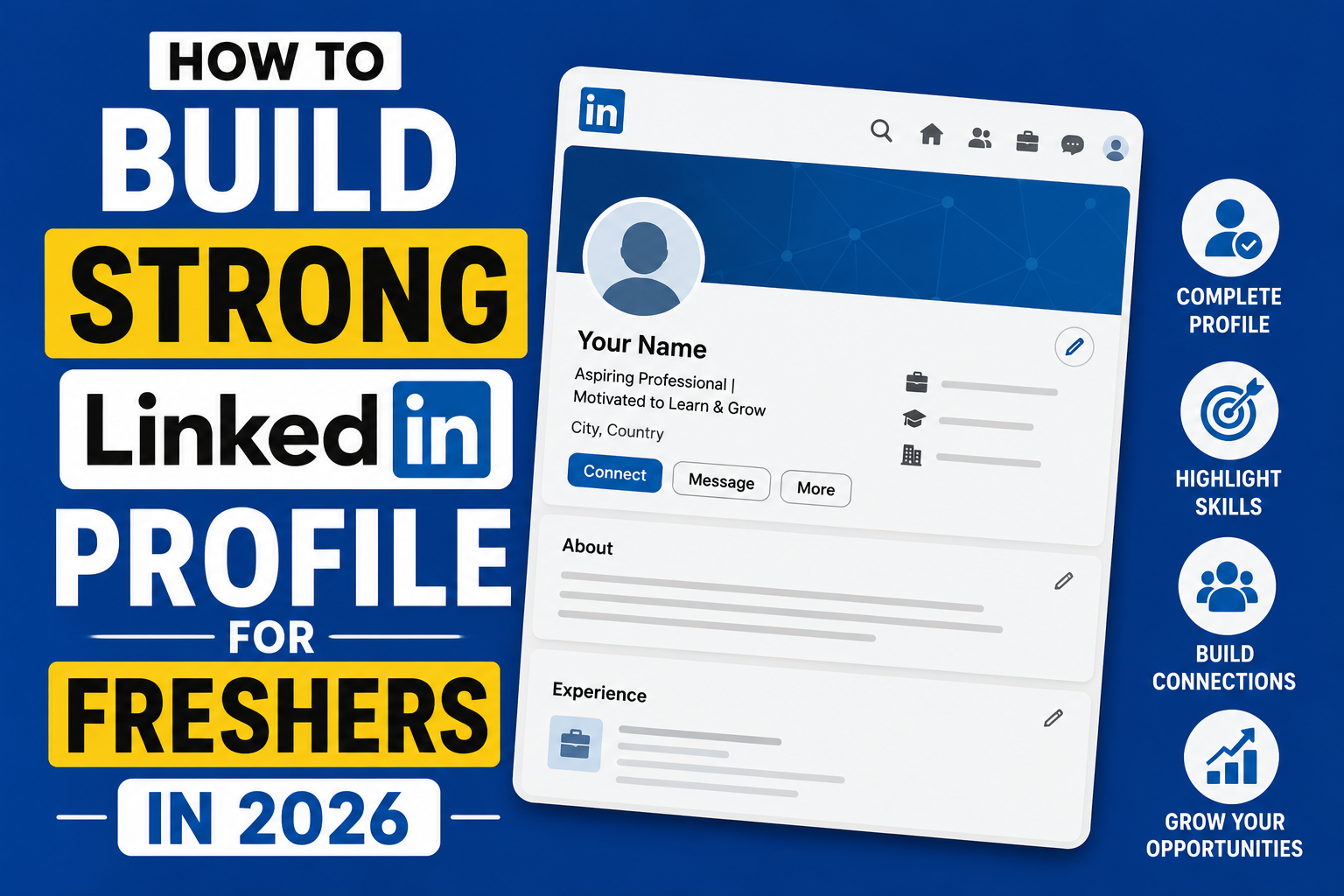
Skills alone are not enough for getting hired in 2026. Rather, building skills is just one side of the story. Skills need to be presented effectively. Despite having spent many months learning, working hard, and receiving relevant certificates from various courses, many graduates still fail to gain opportunities because others just don’t know what skills they have. This is where LinkedIn comes into play. In the modern digital age, it plays much bigger roles than just a social network. Think about being an extremely talented chef who works in a restaurant that no one knows about. Even if the chef is very skilled, no one can enjoy the food until people know about his restaurant. Likewise, you need to market yourself in order for others to see what great things you can offer.
Why LinkedIn?
Linkedin has emerged as a very powerful tool for both students and professionals when it comes to making a career. However, the importance of LinkedIn goes beyond merely uploading a resume. Rather, it helps to establish a personal brand by showcasing your skills, accomplishments, experience, and connections in multiple industries. In the digital era, the job interview process involves a screening via the internet which helps the interviewer know about the applicant.
Therefore, having an effective LinkedIn profile can prove beneficial while making the right first impression. As far as the benefits for students are concerned, it provides numerous possibilities regarding internships, workshops, education, and job opportunities. This medium can help one exhibit consistency in his work through the means of publishing projects, certificates, sharing a journey towards learning about the field of expertise. Other than that, LinkedIn allows one to learn from other professionals and keep oneself up-to-date with the latest trends in the market.
Basic upgrades you need to add in your LinkedIn profile:
Professional photo
Some people use LinkedIn like Facebook and Instagram and just share informal photos that do not make them appear professionally. Sometimes, there are issues with the quality of these photos, for example, the blurriness, excessive editing, or even having a background which is full of distractions due to various sceneries. Even if you want to appear professional, these minor aspects could impact your perception by those people who are looking through your account. There is no need to take photos at a fancy photoshoot or edit them extensively. A simple picture with a plain background, proper lighting, and an appropriate facial expression will be sufficient.
LinkedIn banner:
Another thing to take into note is the banner of your LinkedIn page. Though this area is rather limited, it could serve as a short description of yourself. Do not leave it blank try adding something creative to it. If you are a student, then briefly describe your ambitions and goals.
For instance, if you are a professional, state your specialty. Tag lines that are relevant to you include “Innovative thinker passionate about bringing innovations into reality” or “Future Entrepreneur”. The banner creation process is easy since there are many online tools that help you edit photos and create cool banner designs.
LinkedIn headline:
The LinkedIn headline is among the most critical parts of the whole LinkedIn profile as it describes who you are within some few sentences. Many students have not known how to fill this section hence missing out on an incredible way of creating a memorable impression. However, filling up this space effectively requires you to define yourself within your field of work/study, interests, hobbies, specialties, or goals.
This will be seen by employers and other professionals right after seeing your name. Rather than simply stating your college’s name, you need to consider including what you are passionate about in life. For instance, instead of ECE student, a person can state something like “ECE Student | IoT Enthusiast | Content Writer | This provides a general overview of your personality and skills.
About section
This part is where you have a chance to represent yourself without talking about your credentials and certificates. Do not think of it in terms of creating another CV, consider it a chance to tell your story. Speak about what you are working on right now, what you are learning, what you are accomplishing. List your favorite areas and the type of opportunities you would be interested in. You can add some information regarding your personality and personal strengths. Remember that your goal here is to show people more of you than just your professional skills.
Education and work experience:
Education and work experience are the two sections which will allow people to comprehend your educational qualification and your exposure through actual work. Under the education heading, don’t list only your college name along with your degree. Include your achievements, activities, certifications, training programs, or project work in this section to showcase your academic experience.
Under the work experience include your internship, freelancing job, volunteer job, or other forms of real work experience. Any experience can be mentioned as long as you have learned something from that experience. Describe briefly what you did in that role and what skills you acquired from there.Include all the skills you learned under skills section separately
Featured Section
The Featured section on LinkedIn can be really helpful in putting your best foot forward with just a click. Most people tend to overlook this section; however, this particular feature can make the process simpler for recruiters as well as viewers since everything related to your skill sets will be put together in one single section. Here, you could add projects, certificates, articles, presentations,portfolio links, and good performing LinkedIn posts. Rather than making people look for your accomplishments in different sections, this makes the job easier by putting your accomplishments all at once in front of people.
Be consistent to post in LinkedIn:
LinkedIn posting is not just about putting up certificates and achievements. It’s also about connecting to other people, and you should post about your work experience or learning. What are the goals you have achieved? How did you learn from previous projects? What kind of resources did you read that actually helped you understand better? If you are studying something right now, post what you’re learning and do not be afraid to put out questions if you need help in some particular area. Perhaps, your learning process can inspire other learners who have the same problems.
Do not try to make your posts look more attractive and impressive than what you actually think about. Post about things that matter to you and might be interesting for others as well. Avoid entertaining content and focus on something valuable to say. This way, you will attract the right audience and find people who have the same concerns and interests. The regularity in posting will bring good results and make connections. Sometimes all you need is one post on LinkedIn to find your dream job or internship, collaboration, or even clients when you work as a freelancer.
Active engagement in LinkedIn:
Think of LinkedIn as a tiny activity to do on a daily basis, instead of an app to log into only when you look for work. Instead of spending all your spare time going through Instagram or YouTube, give yourself 10 minutes per day on LinkedIn, preferably when you feel bored or have a few minutes to relax. Browse interesting posts, learn about what others are learning, know industry trends, and engage with individuals, such as by showing appreciation for their efforts through likes or comments. Interact with those who post helpful material that may be useful to you as well.
Another advantage offered by LinkedIn is that it enables one to grasp industry expectations. Look for job openings, connect with different organizations, and know what recruiters look for from candidates. When you are active and consistent on the platform, your profile becomes more visible to people, making networking easy.
Conclusion
LinkedIn is not only the website that allows finding job opportunities but also the place where you can create a valuable network of professionals through appropriate communication and connections. One has to be presented on LinkedIn properly, which would mean having his or her profile answer all possible questions of the recruiter without making an application.
In particular, a person’s profile has to make clear the identity of this individual, the set of his or her skills, passions, and contributions to a prospective organisation. Everything mentioned above should appear in your headline, summary, and updates of LinkedIn. As soon as a recruiter visits the page with your profile, this person should immediately understand why he or she would like to hire you and what benefits would be brought by your skills. If a recruiter finds those answers in your profile, opportunities naturally start coming towards you.