If you are a student or a recent graduate trying to break into your industry, you already know the frustrating cycle where every job asks for experience, but nobody wants to give you your first chance. The loop repeats wherever you go.
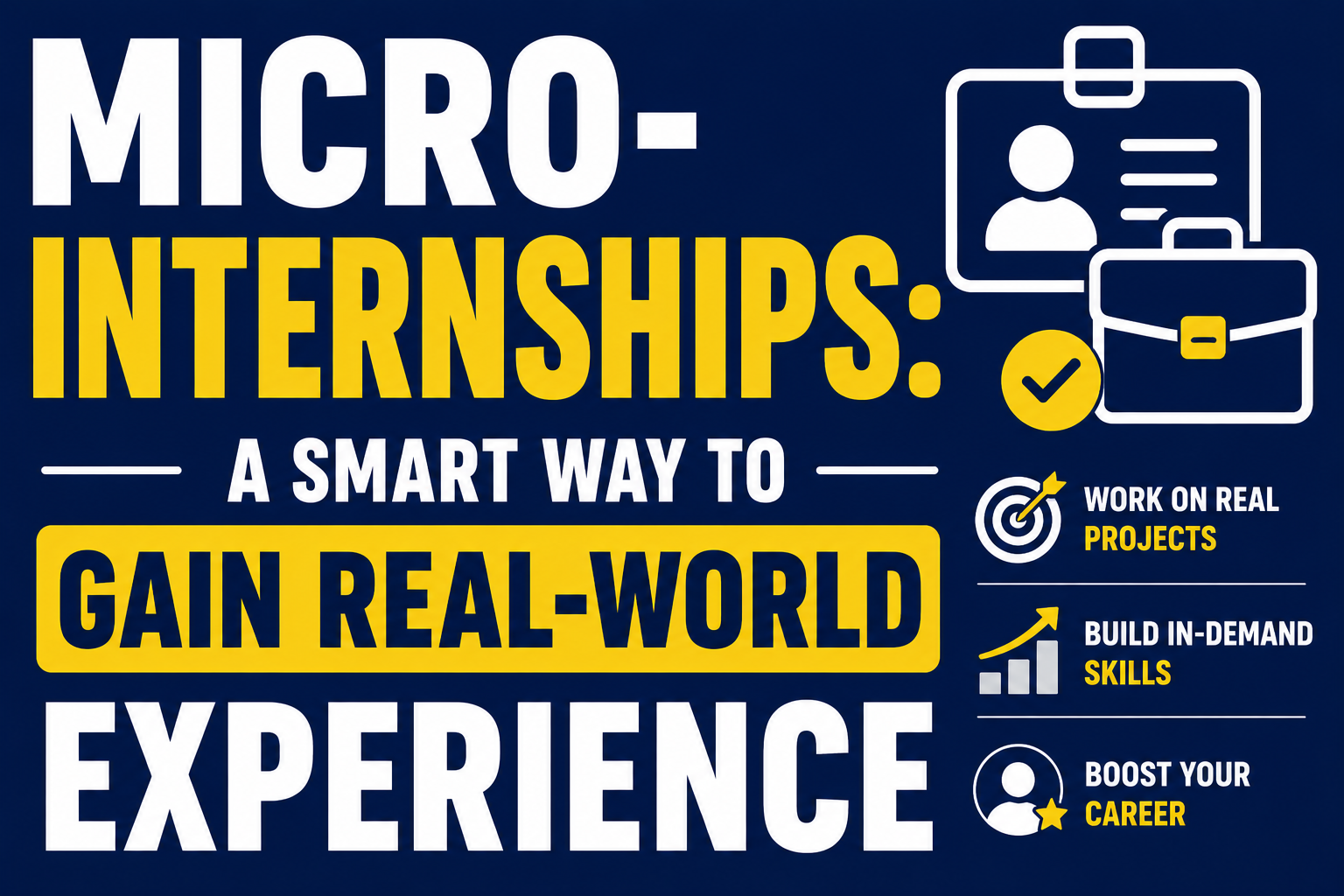
Micro-internships are changing that. These are short, project-based work opportunities that connect you with real companies for a few days or a few weeks. No long commitments. No waiting for the semester break. Just real work, real skills, and a real chance to get noticed.
What Are Micro-Internships?
A micro-internship is a short-term, paid or unpaid professional project where you work on a specific task for a company. Unlike traditional internships that last three to six months, micro-internships usually run anywhere from a few hours to a few weeks.
You might be asked to write a marketing report, build a social media plan, research competitors, or design a landing page. It is a single focused project with a clear start and end.
Traditional Internship vs. Micro-Internship
The biggest difference between a traditional internship and a micro-internship is the structure. Traditional internships often involve onboarding, training, and gradually becoming part of a team over several months. Micro-internships are task-driven. You come in, complete the assigned work, and move on.
This makes them ideal for students and graduates who cannot commit to a full semester but still want meaningful experience on their resumes.
They are also more accessible. Many micro-internships are remote, which means a student in Pune can work on a project for a startup in Bengaluru without relocating or changing their entire schedule.
Advantages of Micro-Internships
- You build real-world skills quickly by working on actual company projects.
- Your portfolio grows with every completed project, giving you tangible proof of your abilities.
- You expand your professional network by working with hiring managers, team leads, and industry professionals.
- You get the flexibility to gain experience alongside college, part-time work, or other commitments.
- Many companies use micro-internships as a way to identify future full-time employees.
Who Should Consider Micro-Internships?
Micro-internships are suitable for many different types of candidates.
- College students who want practical experience before graduation but cannot commit to a full internship during the academic year.
- Recent graduates who need real projects to strengthen their resumes.
- Career changers who want to demonstrate skills in a new industry.
- Working professionals who want to explore a new field without leaving their current job.
For example, a final-year engineering student interested in product management can complete a micro-internship involving user research for a startup. Similarly, a marketing graduate can complete a short content project for a SaaS company and immediately add it to their portfolio.
How to Find Micro-Internships
Finding micro-internships is easier than most people think. Here are a few places to start:
- Internshala — Popular in India for short-term and project-based internships.
- LinkedIn — Search for “project-based internship” or “short-term internship” and filter by remote opportunities.
- Handshake — If your college is connected to Handshake, check for project-based opportunities from recruiters.
- Your university placement cell — Many colleges have partnerships with companies offering short-term projects.
- Cold outreach — Reach out directly to companies you admire and propose a small project you could complete for them.
How to Succeed in a Micro-Internship
The short duration of a micro-internship means there is very little time to adjust. To make the most of the opportunity:
- Set clear goals before starting the project.
- Communicate regularly with your point of contact.
- Ask for feedback before the project is completed.
- Document your work, screenshots, results, and achievements for your portfolio.
Final Takeaway
Micro-internships give you real experience, meaningful professional connections, and a competitive advantage without waiting for the perfect opportunity.
Start with a small project, deliver quality work, and let your results speak for themselves. The job market in 2026 is competitive, but opportunities have never been more accessible for students and fresh graduates who are willing to learn and take initiative.